
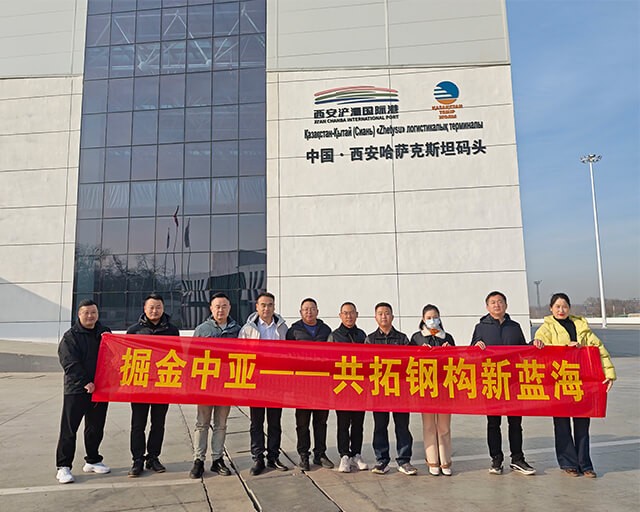
Recently, a delegation led by the management team of Tiankai Southeast Green Building Technology (Henan) Co., Ltd. ("Tiankai Southeast") traveled to Central Asia for a multi-day market research and business exchange program.
The visit focused on key regional markets, including Kazakhstan and Uzbekistan, with the goal of gaining a deeper understanding of steel structure industry trends, infrastructure development needs, local market conditions, and potential cooperation opportunities.
The visit represents an important step in Tiankai Southeast's strategy to expand its business presence in Central Asia and strengthen cooperation with markets along the Belt and Road.
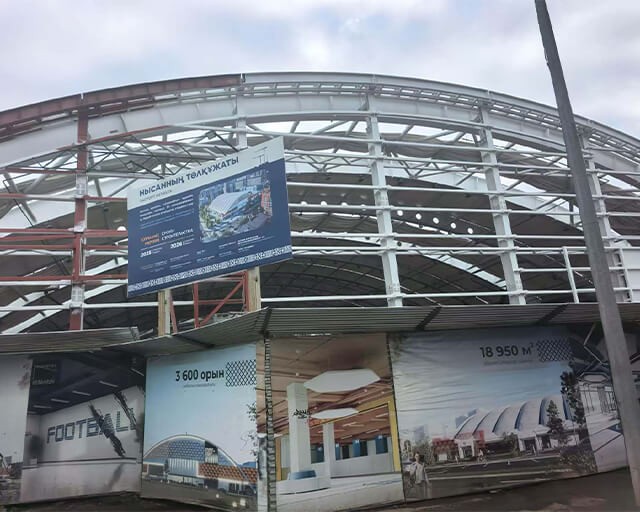
Capturing New Opportunities in Central Asia
As an important region along the Belt and Road, Central Asia has experienced continued growth in infrastructure construction, urban development, energy projects, industrial parks, transportation facilities, and public buildings in recent years.
These developments are creating growing opportunities for the steel structure and advanced building materials industries.
Industry data indicates that the metal building materials market across the five Central Asian countries reached nearly USD 4.8 billion in 2024 and is expected to grow at a compound annual growth rate of approximately 6.2% between 2025 and 2030.
As construction standards continue to improve across the region, demand is increasing for high-strength, corrosion-resistant, environmentally friendly, and prefabricated steel structure products.
This trend creates significant opportunities for Chinese steel structure manufacturers with strong production capabilities, advanced technologies, and international project experience.
Tiankai Southeast's visit to Central Asia was therefore an important initiative to better understand regional market demand, identify new business opportunities, and advance the company's international development strategy.
Understanding Local Market Demand
During the visit, the Tiankai Southeast delegation traveled to several key business and industrial areas, including industrial zones in Almaty, Kazakhstan, and building materials markets in Tashkent, Uzbekistan.
The team also visited representative infrastructure and construction projects to gain first-hand knowledge of how steel structure products are applied in local industrial buildings, public facilities, energy projects, and infrastructure developments.
Through these field visits, the delegation gained a deeper understanding of local technical standards, product requirements, supply chains, market conditions, and the competitive environment for steel structure products.
Tiankai Southeast also held discussions with local investment associations, building materials industry organizations, and major construction contractors.
The discussions covered regional infrastructure policies, steel structure market demand, technical standards, supply chain cooperation, and potential models for future project development.
During the meetings, Tiankai Southeast introduced its core capabilities in metal structure manufacturing, advanced building material research and development, and prefabricated steel structure technology.
The company also presented its achievements in green building technologies, energy-efficient construction materials, intelligent manufacturing, and comprehensive quality management.
Tiankai Southeast's full-process quality control system, steel fabrication capabilities, and international project service experience attracted strong interest from local partners and created a solid foundation for further cooperation.
Exploring New Models of Cooperation
In response to Central Asia's growing demand for high-strength, corrosion-resistant, and environmentally friendly steel structure products, the Tiankai Southeast delegation held in-depth discussions with local companies on product adaptation, technical standard coordination, production collaboration, and project cooperation.
Both sides recognized the potential to combine Tiankai Southeast's experience in steel structure design, manufacturing, and technical services with the market resources, project networks, and local service capabilities of Central Asian partners.
Based on these complementary strengths, the parties discussed potential cooperation models integrating technical support, production capacity coordination, and project development.
Future cooperation opportunities may include transportation infrastructure upgrades, industrial park development, energy facilities, industrial buildings, and large public construction projects.
Through these partnerships, Tiankai Southeast aims to create mutually beneficial relationships that combine technological expertise, manufacturing capacity, and local market resources.
Strengthening the Company's Central Asian Strategy
In addition to exploring market demand and project opportunities, the Tiankai Southeast leadership team also conducted research into local government policies, logistics networks, import and export conditions, and regulatory requirements.
These insights will help the company develop a more targeted and sustainable strategy for future operations in Central Asia.
As a green building technology company integrating research and development, manufacturing, and engineering services, Tiankai Southeast has comprehensive capabilities covering metal structure manufacturing, steel processing, advanced building materials, and international trade.
The visit further clarified the company's development priorities in Central Asia.
Tiankai Southeast plans to focus initially on prefabricated steel buildings, industrial steel structures, and energy-efficient building materials while gradually establishing localized sales, technical support, and project service capabilities.
Building a New Vision for International Development
The leadership team of Tiankai Southeast considers Central Asia an important strategic market in the company's international development plan.
The visit not only strengthened the company's understanding of local markets, industry conditions, and customer requirements but also created new channels for establishing long-term partnerships with companies and organizations across the region.
Looking ahead, Tiankai Southeast will continue to focus on technological innovation, intelligent manufacturing, and green building solutions.
By leveraging its capabilities in steel structure manufacturing, advanced building materials, and engineering services, the company will continue to integrate upstream and downstream industry resources and deepen cooperation with Central Asian partners.
Taking advantage of the opportunities created by the Belt and Road Initiative, Tiankai Southeast aims to bring high-quality steel structure products and integrated building solutions to more projects across Central Asia.
While contributing to regional industrial development and infrastructure construction, the company will continue strengthening its international capabilities and global brand presence, working with overseas partners to create new opportunities for cooperation and shared growth in the steel construction industry.